
Film notes
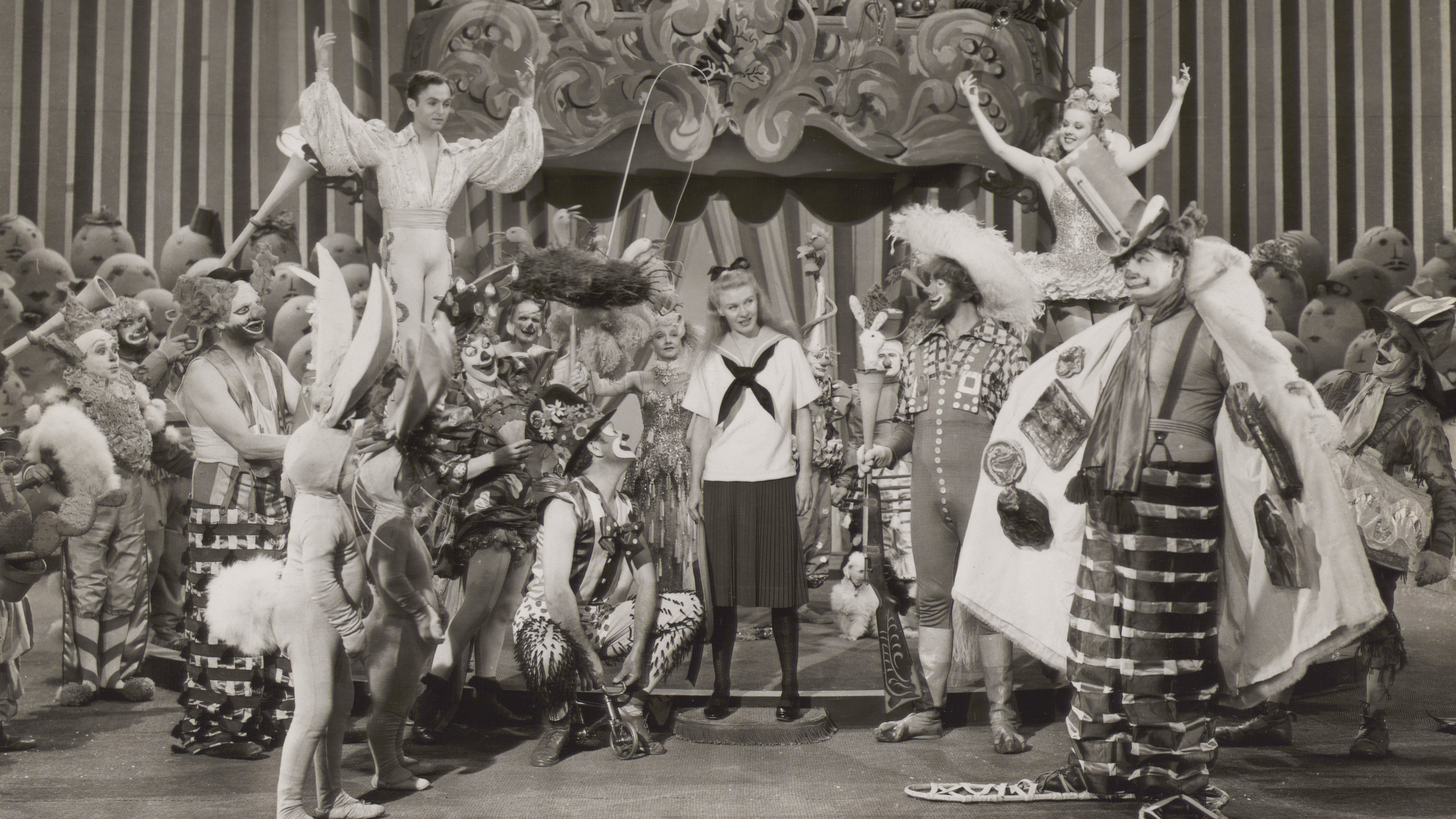
Mitchell Leisen’s first film in colour came into being with the idea of tuning into the recently mainstreamed fad of psychoanalysis. The premise was to go against the grain of heavier, darker Freudian films and instead explain the film’s central theme – the Electra complex – to the masses in the lightest manner possible, as a musical comedy. Lady in the Dark was based on a play by Moss Hart, who wrote it drawing on his own psychoanalytical experiences. Mitchell Leisen found the script by Frances Goodrich and Albert Hackett unfilmable; he discarded it and, uncredited, rewrote it himself. The story was partly a reaction to women flooding the workplace during the Second World War and partly a vehicle for Ginger Rogers, then at the peak of her fame. Ironically, the star, who only ever arrived on set in the company of her mother, refused to learn anything about Freud. Rogers plays an inflexible fashion magazine editor suffering from a mysterious illness. Her doctor tells her it is psychosomatic. At the office, she is surrounded by men and their various shades of masculinity: a teasing heel who works for her as advertising manager (Ray Milland), a gay fashion photographer (Mischa Auer), a wealthy entrepreneur (Warner Baxter), and a rugged movie star (Jon Hall). She encounters them in her Technicolor dreams, outrageously painted blue or gold. Typical of a Leisen heroine, her senses are stirred every time she hears a song she cannot identify. The melody is stuck in her head but she does not know the words. The cure lies in remembering the song (which is, like other songs in the film, by Kurt Weill and Ira Gershwin) and what it meant to her in childhood. This contrived solution is quickly forgotten in the glow of one of cinema’s most iconic costumes: the glittering red dress in which Leisen clad Rogers, allowing her sexuality to become seductive and conspicuous. This is, unquestionably, a fascinating mess – a campy feast of garish colours splashed across oversized sets, and a cinematic orgy designed to cure a frigid character.
Ehsan Khoshbakht