Film notes
Dianne Karenne
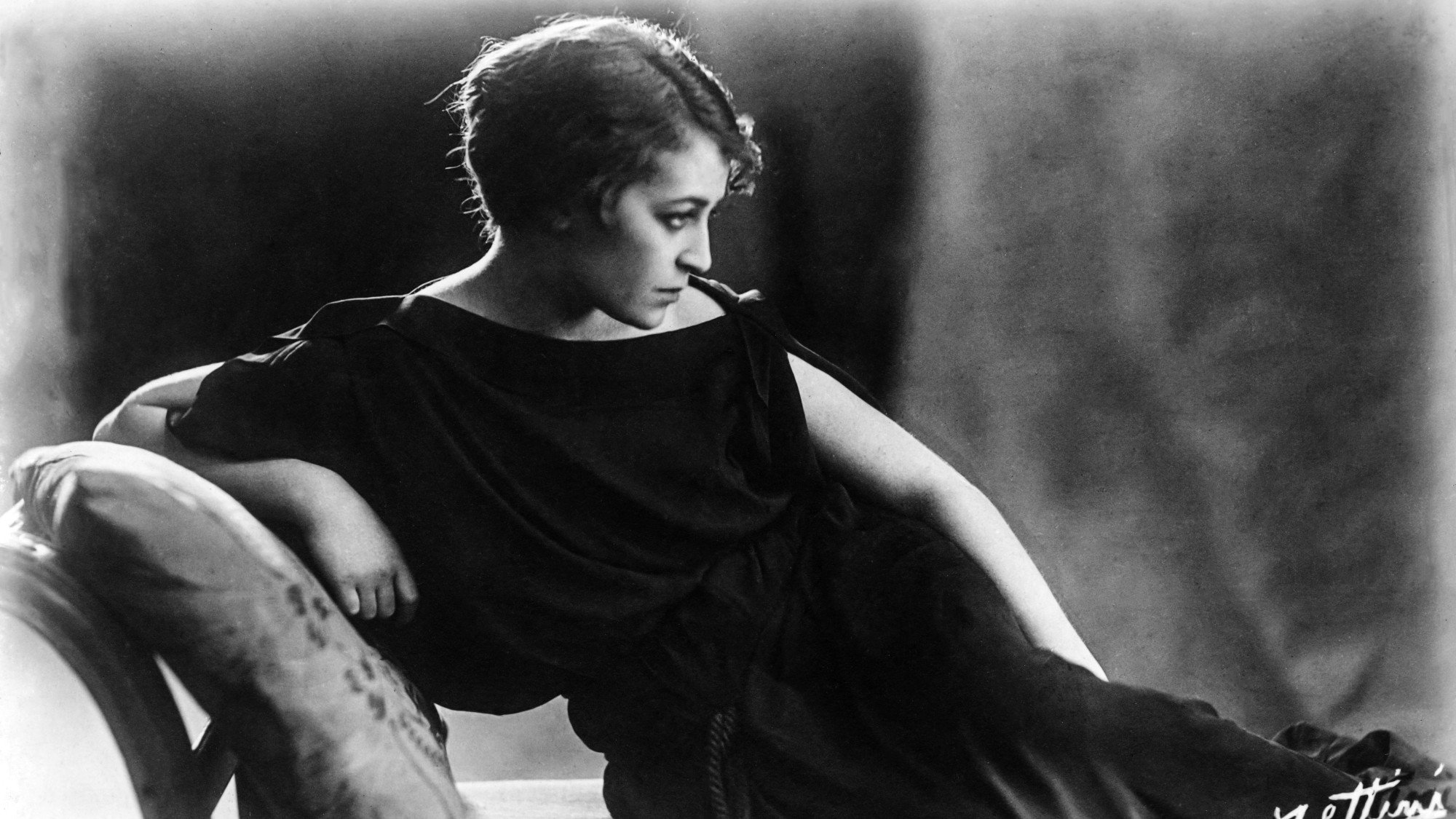
Diana Karenne was a very prolific and multifaceted figure, who totally devoted herself to art, being a film actress, scriptwriter, director, producer, but also a film critic, painter and, seemingly, a musician. For a decade she worked in several European countries, moving from Italy in the teens to Germany in the early 1920s, as the national film industries developed. She eventually settled in France in the second half of 1920s, where she played her most well-known role in Alexandre Volkoff’s Casanova, 1927. She was a nomad but, solely for the sake of the art of cinema.
The almost total lack of surviving titles of Karenne’s filmography contributed to her legend. More particularly, up until today only one film, Miss Dorothy, preserved by the Cineteca Nazionale in Rome, and a few fragments from her long and intense career in Italy were still known to exist.
Despite all the efforts made by film historians and scholars, Diana Karenne remains one of the most elusive figures of Italian silent cinema. She encouraged myths about herself as she scattered conflicting details here and there about her date and place of birth and, especially, her real name.
There are not so many confirmed details and everything so far written about her is, essentially, wrong. We know that she was born for sure between 1891 and 1897 in Kiev, Ukraine. But her actual name was certainly not Leucadia Konstantin (as often has been reported). The most credible theory as to her real identity is that she was the half-sister of Gregor Rabinovitch, who became a famous producer in France, Germany and Italy from the 1920s until the 1950s (this connection is mentioned in some documents held by the descendants). In 1914 she arrived in Italy with the name of Dina Alexandrovna Karen and, shortly after that, she also began using the name Nadezhda Belogorskaya (or Belocorsca) in her private life. She had her breakthrough in cinema in 1916. At the end of her film career, she married Russian poet Nikolay Otzup, also acquiring his surname, and lived in a secluted way until her death which did not occur, as again often reported, in Germany in 1940 under the Allied bombings, but in Lausanne on 18 October 1968 (as proven by her death certificate).
Tamara Shvediuk