
Film notes
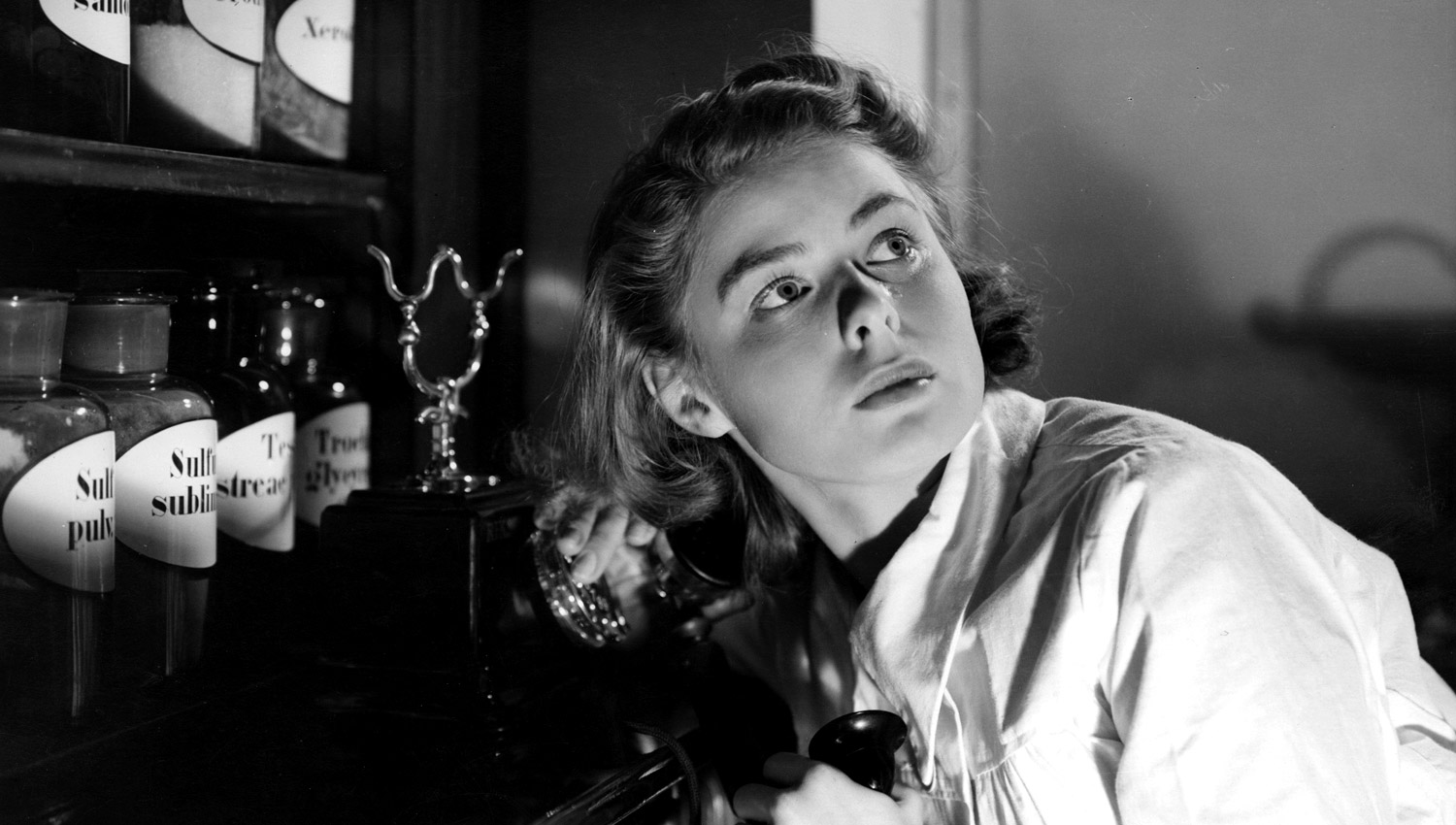
Shot between October and December in 1939, and released in April 1940, Juninatten was to be Ingrid Bergman’s last film in Sweden before permanently embarking on her Hollywood career (she did act in the US version of Intermezzo before Juninatten). Without too much stretch of the imagination, Juninatten could be said to be the closest thing to a film noir there ever was in Swedish cinema, with its chiaroscuro lightning and non-conventional camera angles, and its story of secrets and obsession.
The film opens in a small remote town, where the character of Ingrid Bergman has to fight against a scandalous reputation during a trial occurring after her being wounded in a violent encounter with a lover. Once again, Bergman portrays a woman trying to escape a troubled past, this time even to the extent of moving to the big city and assuming a new identity, where she tries to keep her former life and events a secret.
Director Per Lindberg began his career in film in the early 1920’s, and one of the two silent films he made was Norrtullsligan. He only returned to the cinema from his first love the theatre in the late 1930’s. His oeuvre from the late 30’s and early 40’s is one of the most interesting in Swedish pre-war sound cinema; his films from this era are uneven, sometimes flawed, always vibrant not to say feverish, with expressive and rich imagery. The denouncement of small-town mentality in Juninatten is reminiscent of his perhaps most famous sound film, the 1941 eerie rendering of hysteria and gossip Det sägs på stan (screened in Bologna in 2005).