Film notes
INEDITS PRESENTS
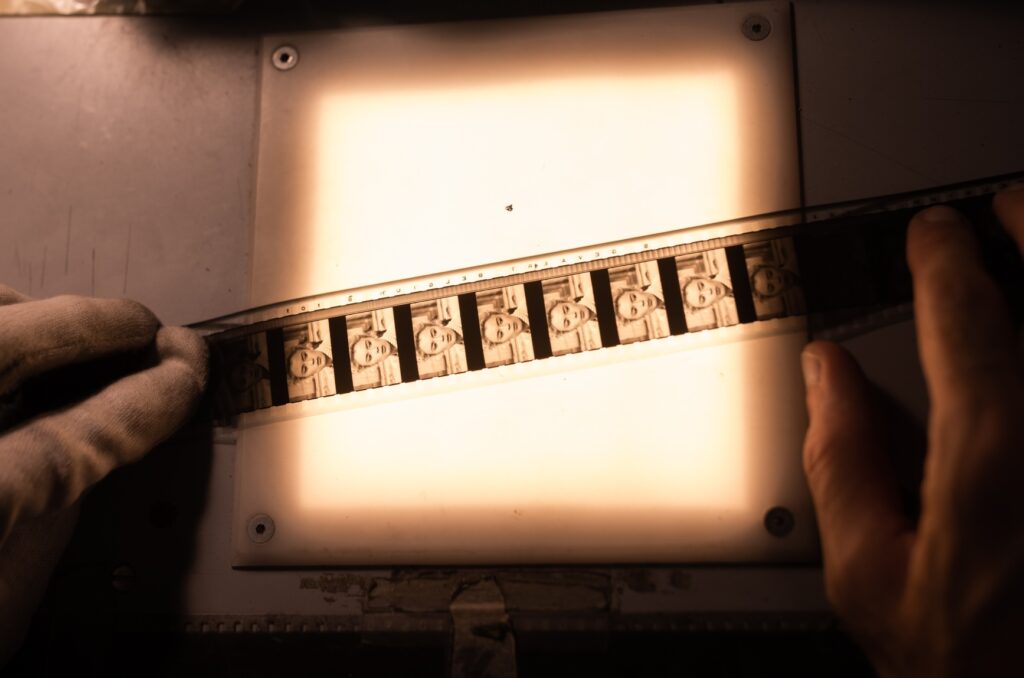
One hundred years ago small-gauge film began to catch on with families, thanks to the Pathé-Baby and the slogan “le cinéma chez soi” – cinema in your own home. Combining a hand-turned film camera with a projector and some reversible film led to a real revolution and utopia began to look like reality: in time, cinema was to become a practice within everyone’s grasp.
Soon, word spread from Paris to more-or-less everywhere: to Europe first, then later much further afield. In Italy, many families were passionate about this new format with perforations down the middle. Equipped with their film cameras, amateur film-lovers documented religious and social rituals, from marriages to communions and baptisms, as well as recording large public events and everyday work.
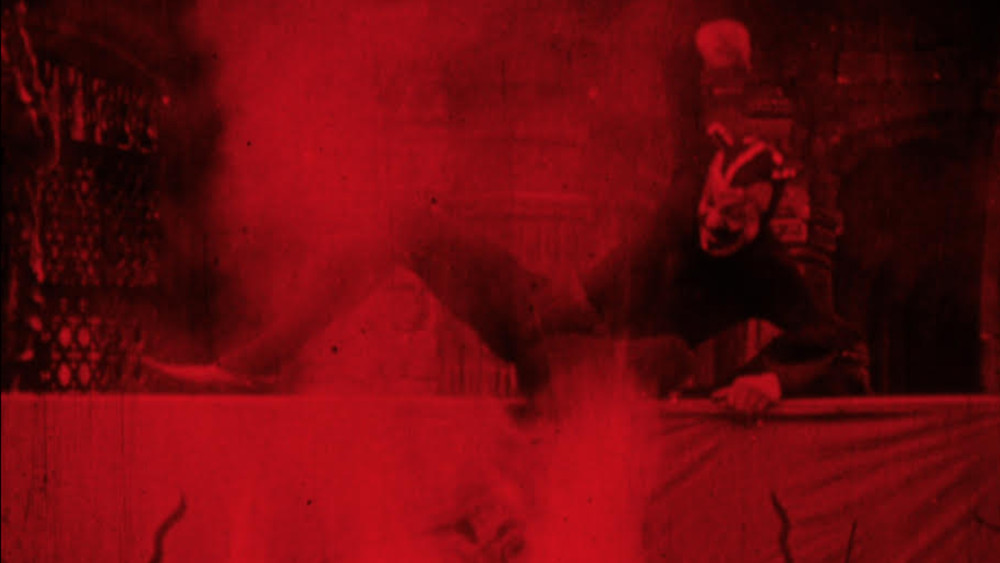
Experimentation and the special effects that 9.5mm allowed amateurs to capture became part of the techniques learned, both through practicing with the device itself and through studying catalogues and film magazines.
Three-quarters of this programme dedicated to amateur 9.5mm film is based around a journey from Bologna to the edges of Europe and from the 1920s to the 1960s: the epic story of a revolutionary format. The final part tells of the experience of home cinema: a reel in which previously unseen footage sits alongside films from catalogues.
The programme is curated by the Archivio Nazionale del Film di Famiglia, as part of Home Movies 100 and in collaboration with INEDITS, a European association which brings together over forty institutions dedicated to the collection, preservation and presentation of home movies and amateur cinema.
One of the projects to mark 9.5mm’s centenary, 100 ans/100 films, allows us to draw on a varied but representative selection of footage.
Mirco Santi
ARCHIVIO HOME MOVIES ITALIAN MEMORYSCAPES
Italy is an enchanting place, as the many travellers who have visited and described it over the years know very well. Photography undoubtedly influenced their ability to communicate this awareness, but cinema went even further, and from the 1920s onwards, amateur filmmakers armed with their own film cameras have left us a precious trace of their memories.
From mountain landscapes to the sea and from historical monuments to cityscapes, this series of moving portraits also includes the coming-and-going of men and women engaged in their everyday business. Stories of gazes that fleetingly meet in landscapes of memory that retrace the beauty of life. Because, as Charles Lindbergh said, “Life is like a landscape: you live in the midst of it, but can only describe it from the vantage point of distance.” That need for distance relates to space, of course, but also to time.
Mirco Santi
PATHÉ-BABY: REELING IN A FAMILY AUDIENCE
In the substantial archives of the Barzizza family, which contain 16mm, 8mm and Super8 films, there are 28 pieces of 9.5mm film. The collection dates from 1929 to the 1940s. One of the characteristics evident in the films is that the longest reels contain a mixture of original films shot with a portable camera and films taken directly from the Pathé catalogue. Thus they combine pure entertainment with documentaries, curiosities and a lot of animation, above all the films of Felice Logatto, who was much loved by children.
Alexandra Schneider describes these reels as perfect examples of “exhibition programmes” (Felice Logatto, Bernardo l’eremita e I boys: Il sistema Pathé-Baby e il caso della famiglia U., “Comunicazioni Sociali”, n. 3, September-December 2005).
The key point that this alternation between cinema and family memories reveals is that the Pathé-Baby was a participatory system, a fully articulated media device used by both adults and children.
Moreover, its playful aspect is revealed not only by the juxtaposition of different types of content. The catalogue films also provide a template for the homemade scenes, which led the Barzizza family to realise special effects such as backward motion, the interruption and substitution of actors, or the use of a highly mobile ‘Motocamera’, which foregoes the static tripod to allow for chase scenes or zooms into figures.
Mirco Santi