Film notes
Religious missionary cinema, which documented the growth of congregations and missions from
the early decades of the twentieth century, is still an under-explored genre. It is a cinema with
fluid boundaries, of which the CSC – Archivio Nazionale Cinema Impresa is one of the principal
repositories in Italy.
Missionary priests documented the world around them with great technical ability, easily moving
from still cameras to the moving image. They were particularly drawn to small and robust cameras
that can withstand extreme climates and be transported unscathed across savannas and deserts,
and they preferred smaller gauge film formats such as 9.5mm and later 16mm. They were early
adopters in a rapidly developing market to which companies like Pathé Baby paid particular
attention; this is clear from the adverts that appear in the pages of Catholic magazines during the
period, which convey a clear and effective message promoting the practical and economic
qualities of this equipment and their light weight. We do not know whether the priests at the
Istituto Missionari Consolata (IMC) read these adverts, but they were undoubtedly attracted to the
buzz that smaller formats had generated and they made use of them to shoot their films and to
project release prints.
Research into the IMC collection is still underway, but so far, we know that some of these films
were shot by Father Alfredo Deagostini (1904-1989). He was a teacher and assistant to new
initiates and in 1940 he was sent to Ethiopia where he made a documentary on the activities of
the priests in the region.
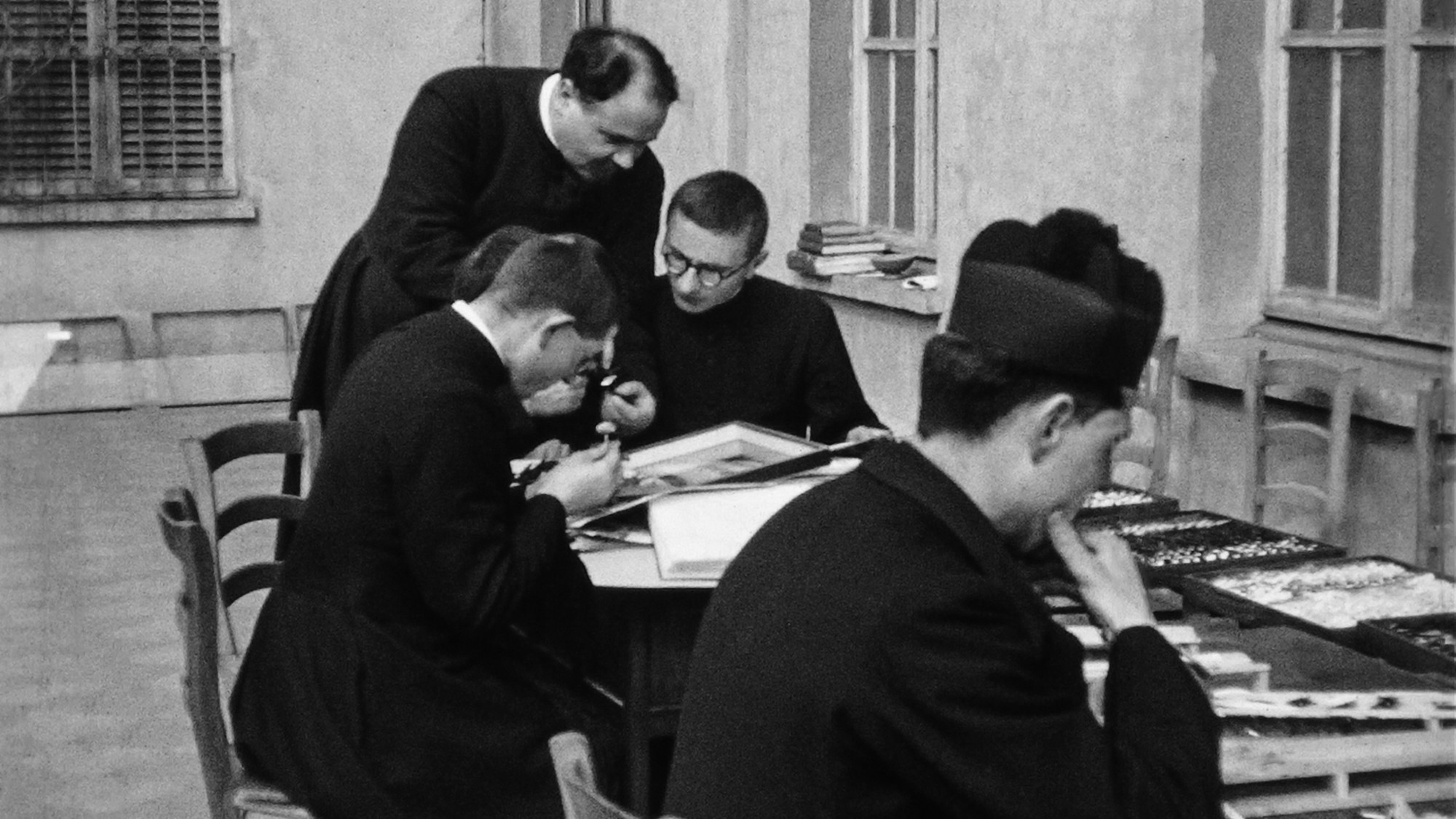
With primarily pragmatic rather than artistic aims, the devout of the Consolata used 9.5mm to
document their activities in the 1930s and 1940s. This included the missionaries’ preparations,
which involved everything from the study of medicine to entomology, their home life and the
teaching and education of youth, the benefits of recreational activities in the open air, and finally,
the priests’ departures and their first encounters with distant lands and their populations.
The IMC films sustain the typical contradictions of the period, in which the boundary between
promotion and propaganda, or between civilising and evangelising, is very subtle. It is precisely for
this reason that they constitute a precious historical source for the study of the twentieth century.
Elena Testa