Film notes
The name Segundo de Chomón (1871-1929) appears in an advert for Barbe-Bleue by Georges Méliès in a Barcelona newspaper dated 12 February 1902. He is described as “the well-known ESSENTIAL CHOMÓN 150
Les OEufs de Pâques 186 colourist of films” and this seems to be one of the earliest traces of his involvement in cinema. Chomón shot a dozen or so non-fiction films and probably also his first trick films in Barcelona beforemoving to Paris, where he was hired by Pathé Frères to work under Ferdinand Zecca in its Vincennes and Montreuil studios. Chomón immediately became the leading and very prolific specialist for scènes à trucs et transformation films and for Pathé’s féeries, replacing Gaston Velle who had been lured away by Cines, the ambitious new Italian company. Like Méliès, Velle was an illusionist- magician by profession and vocation; and his film career, like that of Méliès, ended in 1913 when the corresponding film genres had become extinct. In contrast to these two masters of film magic, Chomón, after prolific run of (maybe 180) wonderfully inventive trick films in France (1906-1909) – many of them with Julienne Mathieu (1874-1943) and sometimes with their little son Robert (1897-1957) – and again in Spain (1910-1912), started in 1913 a new career in Italy, directing films and creating the special effects for big productions in Turin such as Cabiria (1914), Tigre reale (1916) and Maciste alpino (1916). A project promoted by Filmoteca de Catalunya as part of the Government
of Catalonia’s Chomón, Commemoració oficial 2021. 17 October 2021 marks the 150th anniversary of the birth of the great director who was born in Teruel but strongly connected to Barcelona. In collaboration with EYE Filmmuseum, CNC – Centre national du cinéma et de l’image animée, National Library of Norway and Lobster Films, this programme presents ten films made between 1904 and 1913 from our archives.
Mariona Bruzzo Llaberia
To follow:
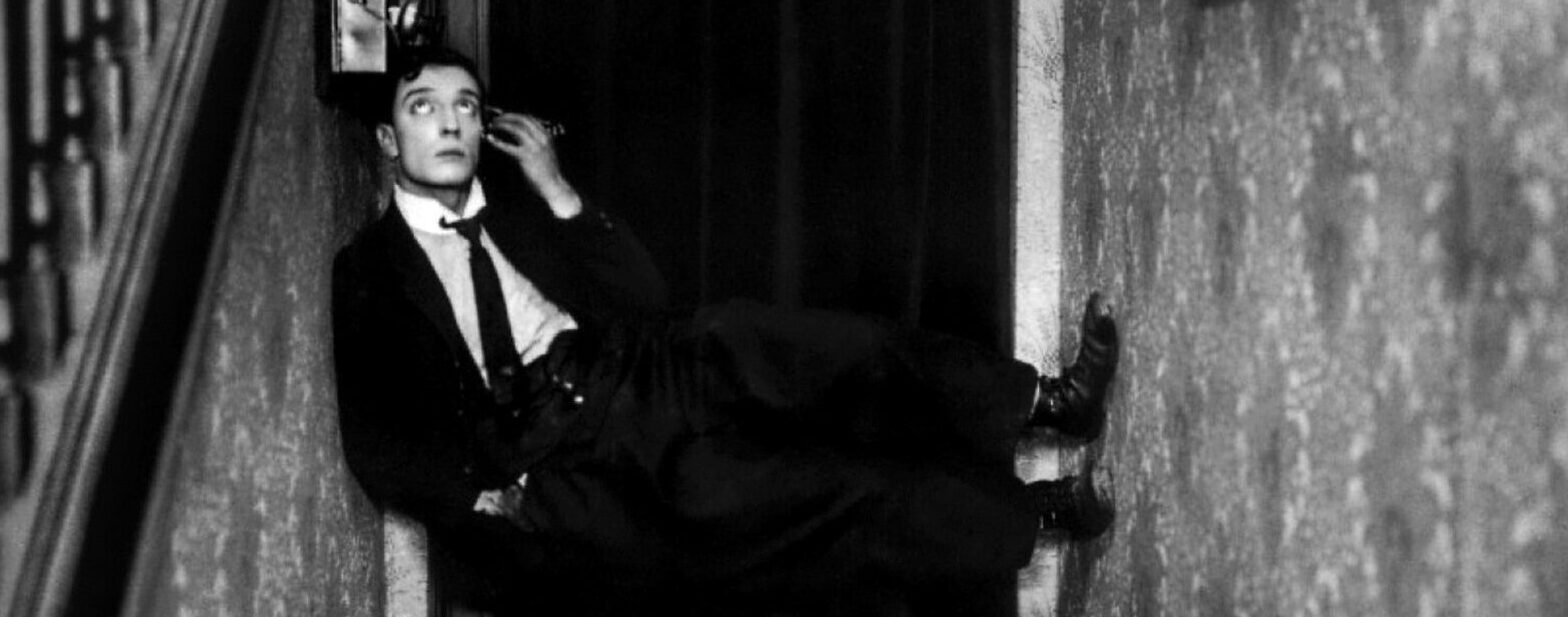
The Electric House (USA/1922) di Buster Keaton, Eddie Cline