


Film notes
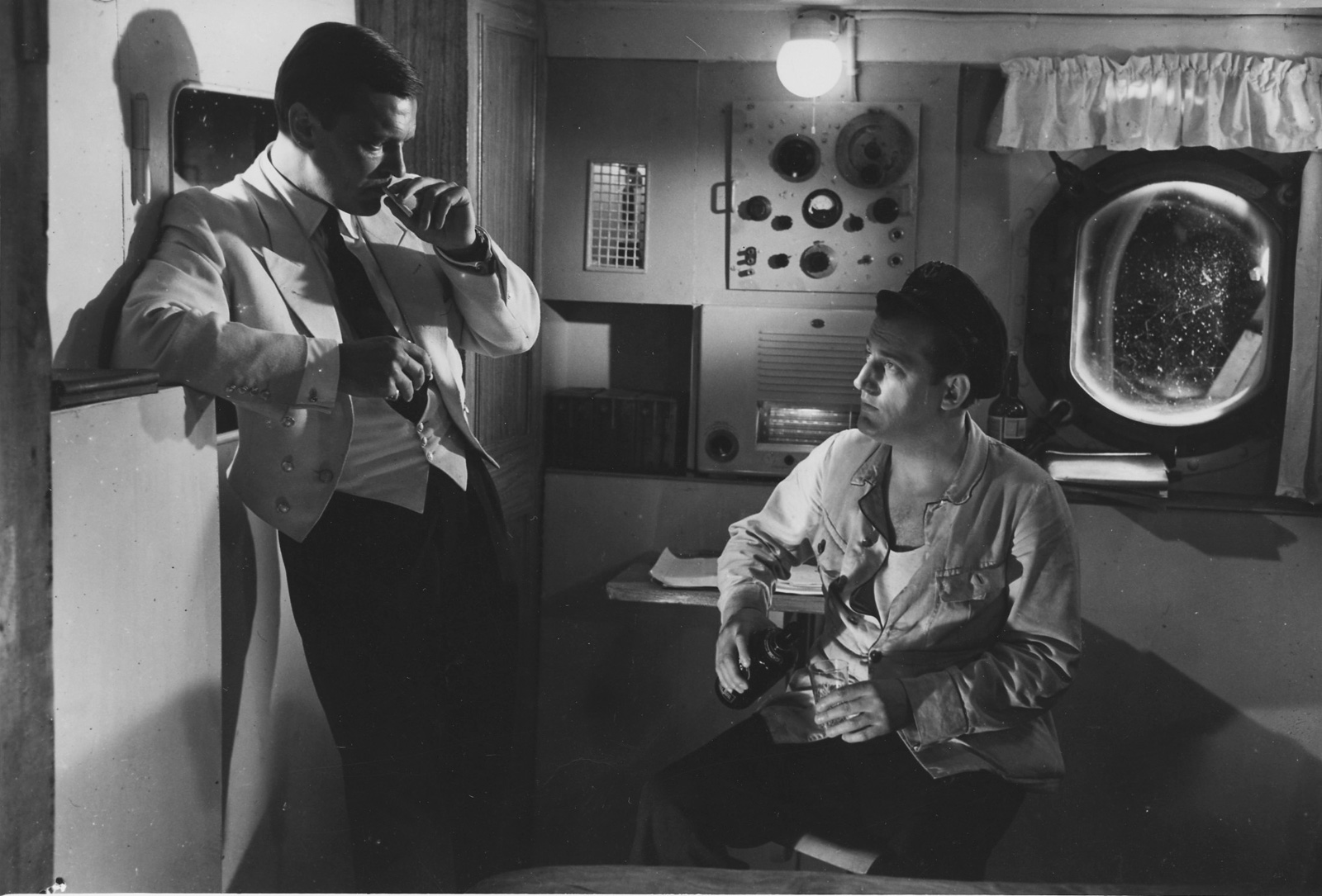
Unter den Brücken was among the last so-called Überläufer (films in various stages of post-production or censorship limbo which got released only after the end of the war) to premiere internationally (1949) and then open at home (1950). By that time, a nation called the Federal Republic of Germany had been born. The same year that Unter den Brücken was released locally, Käutner made another film set primarily on a naval vessel, a yacht built for a Nazi top-dog that some strange characters in post-war Germany rent for their shady-nasty doings which include, among other things, arms deals, espionage and terrorism: Epilog – Das Geheimnis der Orplid. Although it’s due to mere chance, the two works look and feel as if they belonged to each other. If Unter den Brücken is a film about continuities in defiance of socio-political circumstances, with the barge becoming a swimming utopia, then Epilog – Das Geheimnis der Orplid is a tract about historical ruptures in the guise of a political thriller, with the yacht as a huis clos which only the worst, the most devious and the purest somehow manage to escape. Formally, it’s among Käutner’s craziest works – and that means something. The key narrative about the sinking of the Orplid (a reference to the neverland of Eduard Mörike’s Gesang Weylas) is told several times in different modes: first through title cards, then by an unseen journalist whose research one follows (a tour de force of subjective perspective filmmaking), and then as a reconstruction based on an investigative report by said journalist as read by a publisher (an essay in real-time cinema a tad manqué). Epilog is indeed a postscript: we get an idea of what happened to the collaboration-happy industrialists and their lobbyists; of how the occupation forces turned Nazis around for their needs and goods; and from where the new old fascists now organize their underground operations. The Orplid is a can of worms ripped open by Käutner – see them squirm, and die of their own malice.
Olaf Möller