
Film notes
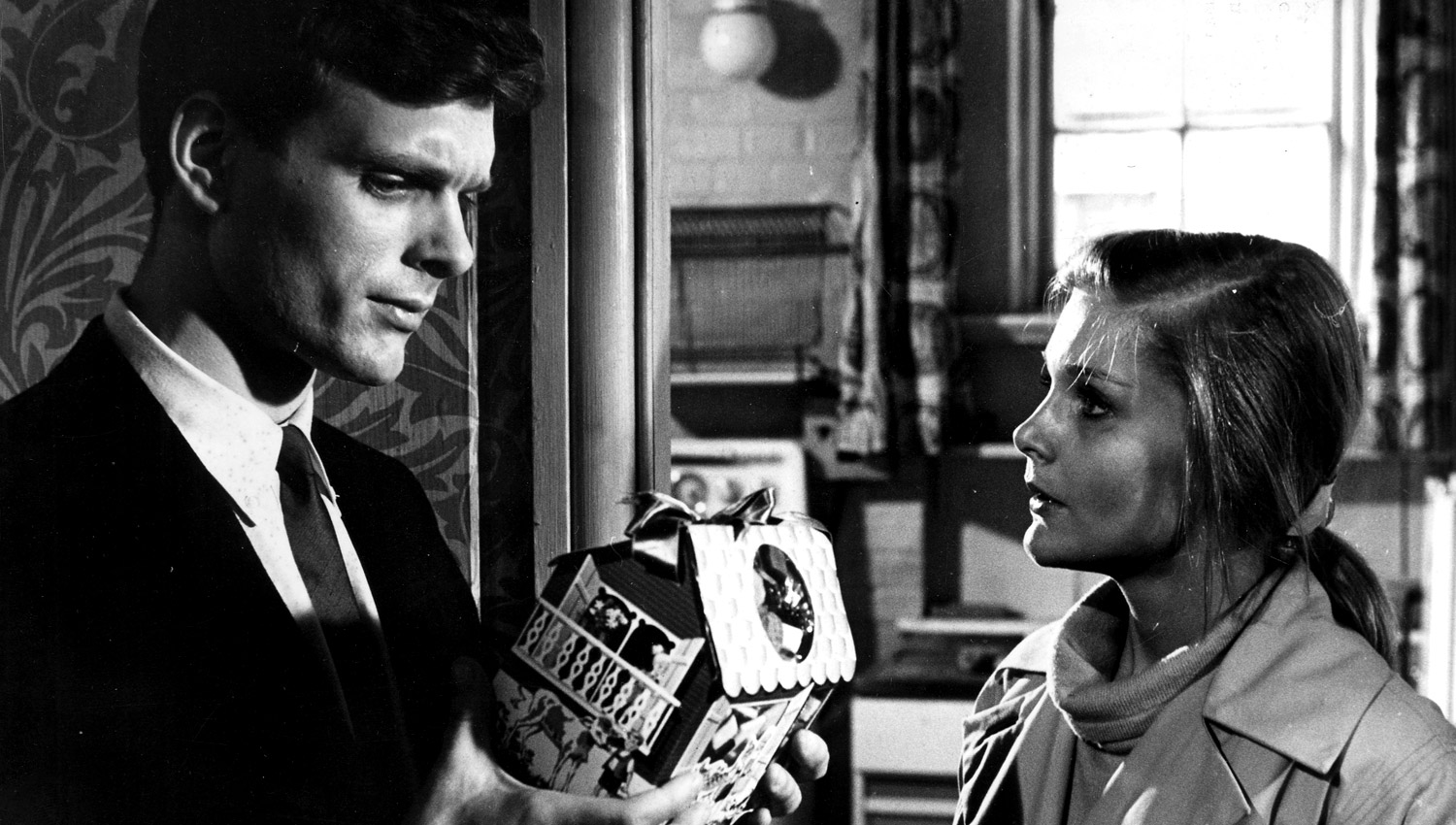
Here, the desire to lose the viewer among false leads and false characters is so obvious as to create a doubt not about the truth of the characters and the secret of their nature, but about the reality of their existence itself: as if the absence of Bunny Lake, presented in the film as a creation of the mind, undermines the real existence of her parents, confining them too to the role of ghosts. So much so that we wonder if we are passing through a world of phantoms moving vacuously looking for shade… The psychological motives, the police investigation, the psychoanalytic explanations encountered along the way appear superfluous, irritating in this game of ghosts, and contradictory, as a result of the realist devices dragging behind them, compared to the evocation of dramas and figures so poorly personified.
In one sense, Bunny Lake is the final destination of Preminger’s ‘fantasy’ streak: never were mysteries, doubts, dreamlike visions, double or triple personalities more flaunted; but it is also his admission of failure: never, in fact, were cruder patterns and more pompous means used for such a subtle and common cause. We can visibly trace – paralyzed within the failure – the dialectic between suggestion and excess, between allusion and redundancy, between the effective and the superfluous, between the two-faced and the monolithic, the struggle between mystery and the system, between shadow and the spotlight (a prophetic scene of Advise and Consent) which, perpetuating itself from film to film and leaving its mark more or less evident in each, ended up with the loss of value of the central figure of the piece, at the same time its symbol and secret.
Jean-Louis Comolli, L’œil du maître, “Cahiers du Cinéma”, n. 178, May 1966