

Film notes
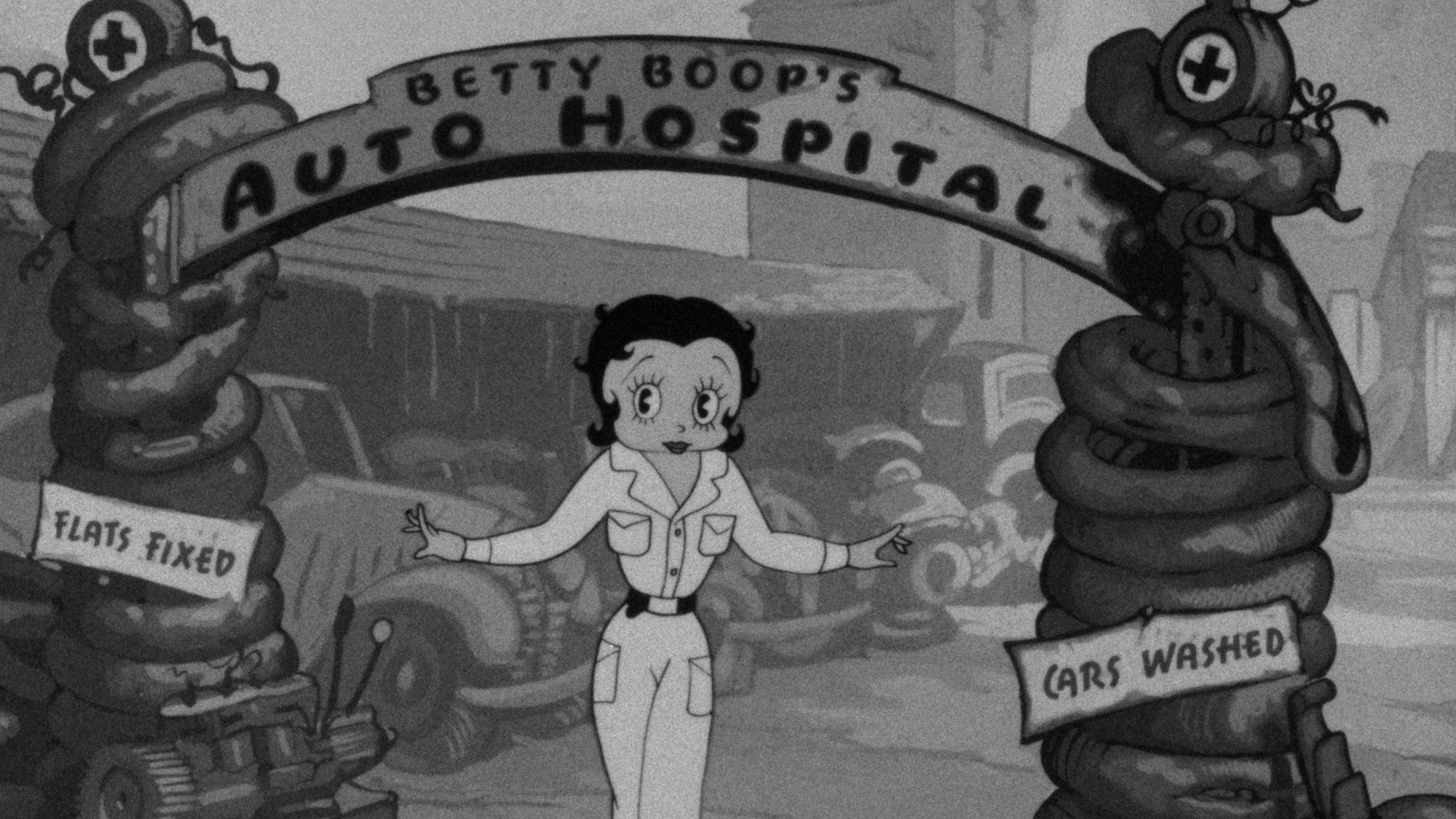
In 1921, the Fleischer brothers …founded their own studio, which until 1942 was second only to Disney’s – not just in America but worldwide. The company was, to a large extent, a family affair. Dave, always second in the chain of command, held a position roughly equivalent to that of an art director. Max’s other brothers – Charles, Joe and Lou – as well as their sister Ethel and brother-in-law Seymour Kneitel, all took part in the venture at various times … A surprising combination of rapid growth and a certain disregard for both stylistic and organizational norms characterised the development of Fleischer Studios. Despite the fact that the studio’s management continued to rely more on improvisation than planning, characters like Betty Boop and Popeye achieved extraordinary success … Among the many mice, ducks, rabbits, dogs and children that populated the cartoons of the era, the feisty New Yorker
stood out as almost subversive. To soften her personality, she was paired with two companions: first KoKo the Clown, with his buffoonish humour, and later the dog Bimbo. In 1934, following the enforcement of the Hays Code, the provocative character was redrawn with more modest clothing, and her focus redirected to ward domestic concerns and a love for animals. After being toned down this way, Betty Boop lost much of her appeal and disappeared from screens in 1939.
Giannalberto Bendazzi, Animazione. Una storia globale, Utet, Turin 201