

Film notes
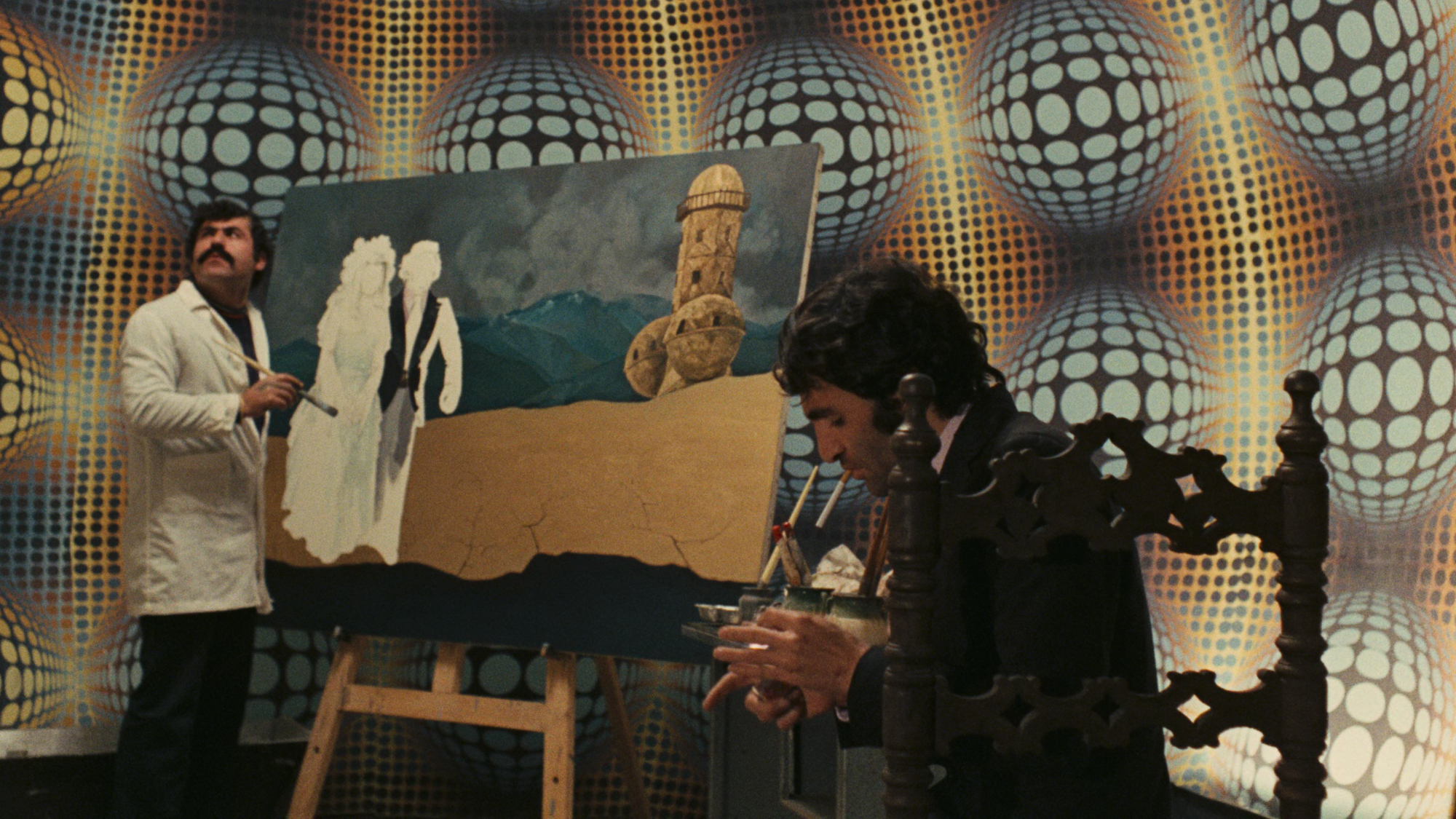
Writer/director/producer Ebrahim Golestan’s final cinematic work, which he also shot and edited, is a political satire about a farmer who discovers a treasure trove in a cave beneath his barren land. The wealth turns him into a mini-tyrant, corrupts the villagers, and attracts parasites from the city. Conceived as a political allegory warning against a rising nouveau riche culture that discarded century- old ways of life in favour of hastily adopted, inharmonious values, the film also pokes fun at intellectuals who turn a blind eye and even assist in the process for their own self-advancement. Golestan, who had already settled in England, returned to Iran only to make this film. Unlike his previous films, he wanted this one to be accessible to the masses. As part of achieving that wider appeal, he chose for the lead the popular TV and screen comedian Parviz Sayyad, famous for his country bumpkin persona — the idiot who speaks the hard truth. That choice landed well, which meant the film had something to insult almost everybody, and its troubles began even before its release. Golestan felt compelled to conceal the story during production (1971–72), as most of the characters were drawn from the leading political figures of the country. Expecting to see his film banned, Golestan even published it as a story in book form before releasing the film. When the film reached the screens, its political message was immediately understood by audiences, who were reported to have applauded during some of the scenes. This made the censors alert to both the film and the book, and they were eventually banned. In the late-1970s relative political opening, the film was screened again in a slightly different cut. Golestan regarded this 1978 version – more concise and better paced – as definitive. (The present restoration is based on that version.) In recent years, the film has enjoyed a second life, largely owing to people reading into it a prediction of the 1979 revolution and its origins.
Ehsan Khoshbakht