Film notes
Nowadays, it is amusing to think that a film like Amori di mezzo secolo, following a troubled journey from set to home video, has only reached us in an inferior version as a result of censorship. The episode directed by Domenico Paolella that should have ended the film was eliminated and probably immediately destroyed; the remaining five episodes and intermezzi were shown in a different order as a result of the removal of the original ending, while the film as a whole was forbidden for anyone under the age of sixteen. In 1978, the classification was reduced to “universal” for a planned TV broadcast, but only after the elimination of numerous scenes and the intermissions.
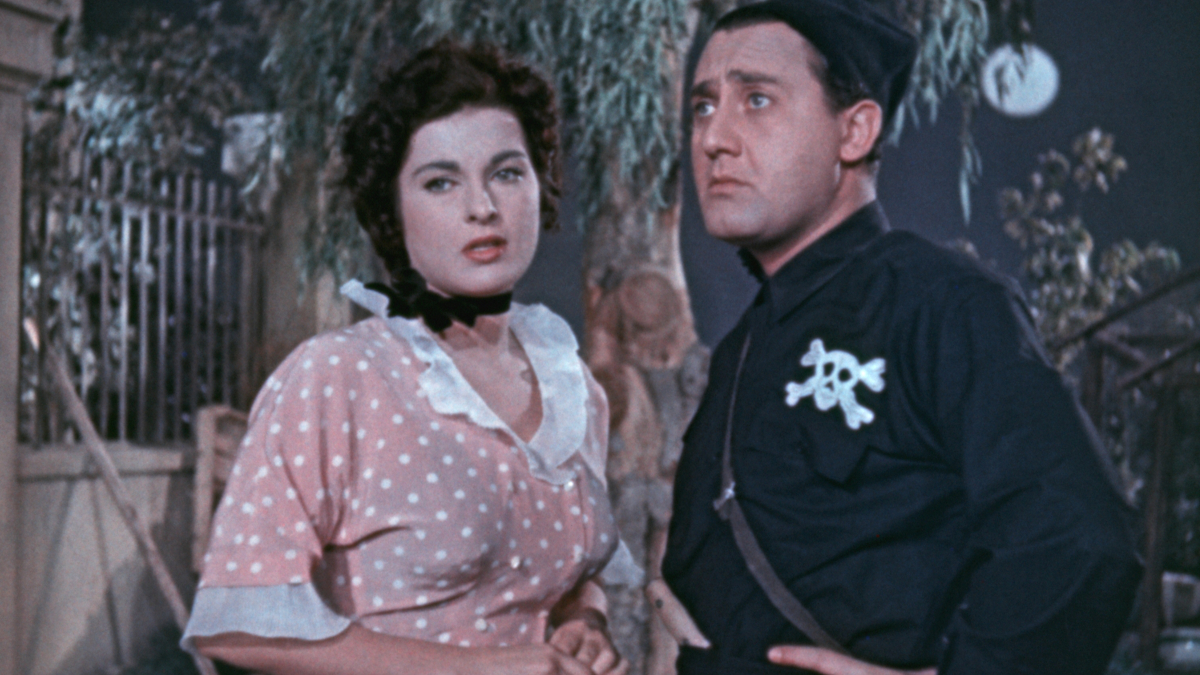
The discovery in the Cineteca Nazionale of a vintage copy that lasts 18 minutes longer (probably the version shown theatrically in 1954) now allows us to rediscover and re-evaluate the entire operation. Virtually unchanged are the episodes by Glauco Pellegrini (a romantic story set in the early 20th century about the love between Leonora Ruffo and Franco Interlenghi that is opposed by a wicked aunt) and by Pietro Germi (a pregnant Maria Pia Casilio waits in vain for the return of her husband from the First World War). The amusing mega-sketch by Mario Chiari, that features Alberto Sordi as an early Fascist who rediscovers his old fiancée (Silvana Pampanini) at Cinecittà, regains various scenes and a new ending. The same is true of the episode that was ultimately placed last, a lively whirl of infidelities and misunderstandings starring Lea Padovani and Carlo Campanini, which Antonio Pietrangeli had the audacity to set in the Parliament (albeit in 1910).
The musical/journalistic intermezzi by Vinicio Marinucci also return. However, the most significant rediscovery is also the shortest; in this restored version, the final scene of the most distinguished episode, set in Naples 1943, and directed by Rossellini, is finally complete. The agony of two lovers, Antonella Lualdi and Franco Pastorino, hit by allied bombs while kissing, is extended by a few seconds and a few words (“Why?… My love… my love…”), thus underlining with desperate courage, the senseless struggle between love and war.
Alberto Anile