Film notes
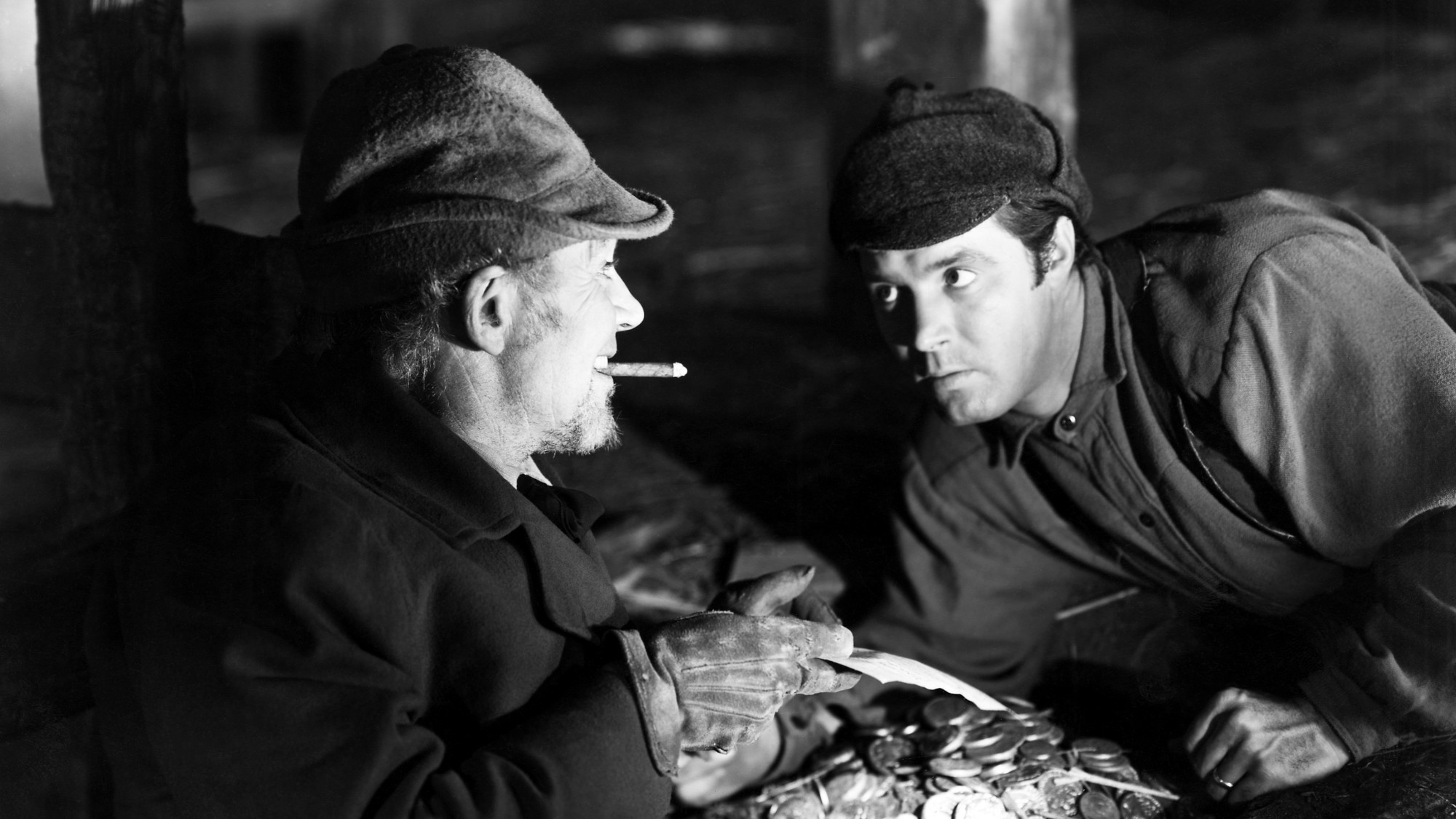
All That Money Can Buy marks the culmination of Murnau’s style in Dieterle’s work… Dieterle’s directing style was a conscious extension of Murnau’s as he found his directorial feet. Here again, Dieterle synthesised a fusion. Many of the rural tableaux in All That Money Can Buy recall the countryside in Sunrise, as do other similarly inspired American melodramas, such as Frank Borzage’s Lucky Star. On theone hand, we find the same eccentric lighting effects, the same taste in set design, the painted skies, the angular hilltops; on the other, the same grasp of rural American folklore, the tall tale, the colourful details… Some have compared Welles’ Citizen Kane to Dieterle’sAmerican Faust tale. The comparison is aided by the presence of many of Welles’ collaborators in the crew, all of whom were RKOproduction talents (Robert Wise, Bernard Herrmann, Van Nest Polglase, Vernon Walker…) If, in fact, Welles was a possible – or actual –influence, Dieterle’s colourful style and complex narration are all his own. It is another example of a fusion of heterogeneous characters, a legendary fantasy (Faust and the Devil), supported by a strangely skewed and stylised image: rural Americana realism, and Dickensian storytelling, intersected, in the style of Welles, with lightening leaps through time and violent transitions.
The film ends with a return to the political and social. The figure of Daniel Webster propels the film to a celebration of democratic American values, while the Devil (in the form of larger-thanlife Walter Huston) reminds us that he is present on all fronts, in all countries. Dieterle highlights the dangers of Nazism and all other fascist or anti-democratic threats. And he gives it form, using the effects of alienation; the Devil is repeatedly shown to be orchestrating the sequences witnessed by the spectator. In the background, searching for new victim, Mephisto (aka Mr Scratch) turns to face… the spectator. A tragically prophetic ending for an America soon to be in the grips of McCarthyism and for a filmmaker who would become one of its victims.
Pierre Berthomieu, “Positif ”, n. 496, June 2002