[MOVIE]

(Italia, 1924). R. e Sc.: Eugenio Perego. F.: Vito Armenise. In.: Leda Gys (Pupatella), Livio Pavanelli (Billy), Nino Taranto (il fratello di Pupatella). P.: Lombardo film, Napoli. 35mm. D.: 57’ a 18 f/s.
“I wasn’t even sixteen years old, but I was already quite requested for celebrations in the town square, I sang “a fronna ‘e limone” (mocking songs) and sometimes I would act in the “sketches”. One day, I was waiting along with a bunch of unemployed artists for the providential “call” in the Umberto di Napoli Gallery, which someone had nicknamed “The louses’ umbrella”, when I saw two men coming my way. One was tall and slug-like, and the other was short and wearing little pince-nez glasses. They saw me and one cried to the other: “There he is, that’s him!”. I had a feeling they were cops. I had nothing to hide, but since you can never be sure, I made a faint attempt to flee. The big slug caught up to me, grabbed me by the nape of my neck and said: “Guagliò, te vo’ abbuscà trenta lire ‘o juorno pe’ na ventine e juorne?” (hey boy, would you like to make thirty lire a day for twenty days?). “E ch’aggia fà?” (For doing what?) “O frate e Leda Gys” (Leda Gys’ brother). My fear dissolved into fascination and that’s how I debuted in cinema. The two men were Livio Pavanelli, the big slug who was almost two meters tall, and Perego, the film director who everyone called “ ‘o Prufessore” (The Professor). That is how Nino Taranto told the writer of his start in this film produced by Gustavo Lombardo, another jewel from Neapolitan popular film which saw Leda Gys as its uncontested queen and which was snubbed by critics with stupid disdain.
Vittorio Martinelli
Vedi Napule e po’ mori! is emblematic of the two years from 1924-25 which confirmed the triumph of Neapolitan cinema as well as the Lombardo-Perego-Gys association that would soon go on to renew the formula’s success (with Napoli è un canzone, 1927 and Napule e…niente cchiù, 1928). In a certain sense the film sums up everything Neapolitan cinema of that era had to offer. As we can see from the newspapers of that time, Vedi Napule… too was characterized by the live performances typical of Neapolitan productions, and in this case that aspect actually reached unquestionable levels of cultivation. At the Moderno cinema in Rome – we read in “Il Tevere” – “in addition to the large orchestra, twelve fishermen in traditional costumes with guitars and mandolins, alternated between nostalgic songs and cheerful fox-trots, set among the truly artistic stage decor representing the enchanting hill of Posillipo”, and no differently in both Turin and Naples, showings were accompanied by rich orchestrations of traditional Neapolitan instruments or by tarantella dances. Hence this cinema does not simply come with constant musical accompaniment. Like Posillipo on the Roman stage, it literally crosses over into the theater, protruding out towards the audience, connecting the audience in a spectatorial experience where cinema and theater constantly blur their borders and hierarchies. This aspect is also evident in the fabric of the film, and undoubtedly in this case as well, Neapolitan film confirms its nature as ante litteram sound film. With numerous sound scenes, Vedi Napule… not only gives visibility to a wide repertoire of sounds, but it also roots them to pretence, showing us Leda Gys subjugated by sound (from the initial, wild tarantella, to the dejection caused by the vendor’s serenade, to the final unbridled collective song during the Piedigrotta parades), which almost seems to create musical themes for characteristics falling between evasion and mystery, typical of the Piedigrotta celebrations, and of the peculiarity of a cinematographic production that is completely bewitched by music and song. Perego also gained strength from the alibi offered to him by the film’s story (presentation of the brief rise and fall of a waif attracted to the world of cinema), and he seems to go constantly in and out of pretence, first adhering fully to Neapolitan nature of the film, then taking, we could say, a more critical, more “Turin-like” look. This view is first of all reflected in the film locations. The spatial dynamic that brings the film to life in fact reveals itself as fully capable of competing with the most famous Neapolitan films, from Assunta Spina to Lucia, Lucì. We also see here the Naples of port-side views, of Marechiaro, of the slums and the shanties. Above all though, we see a city that is never simply in the background, that in the character of its urban life participates actively and actually brings the events to life: At several points the story of Pupatella seems to be a drama of discovery and spatial appropriation that will take her from the slums, on a transatlantic liner and through the American studios, to the point of reclaiming the city of Parthenope under a new guise, in the bourgeois liberty apartment that dominates the street, but also in the street itself – in the “belly of the city” to say it with Serao – where the Piedigrotta chariots will carry her triumphantly down the center.
Paola Valentini

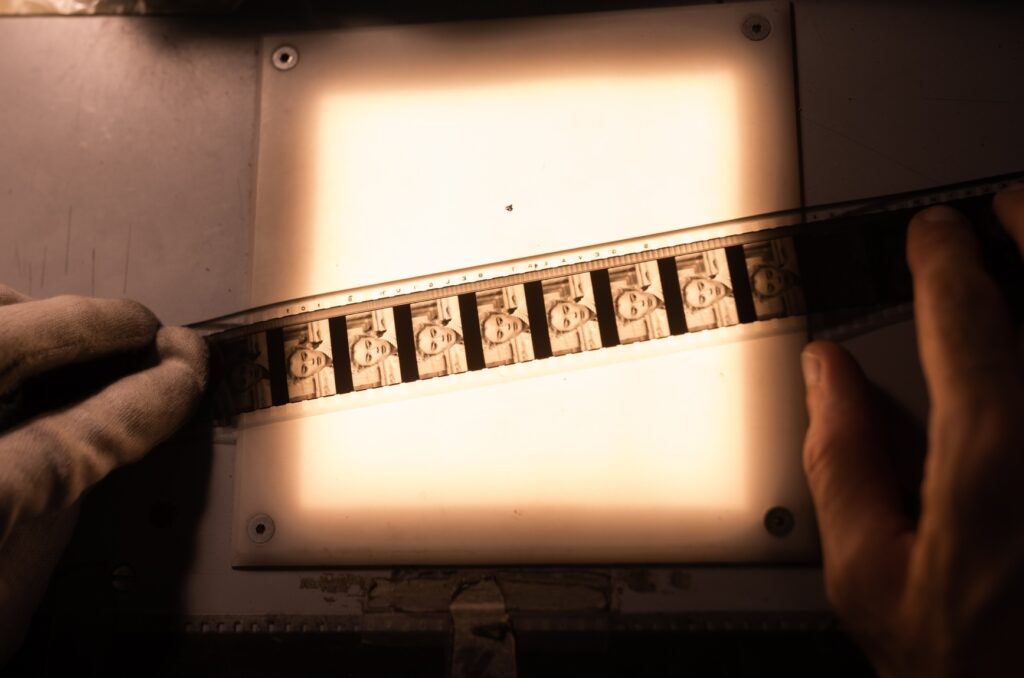
The film was restored from an original nitrate print, tinted, relatively complete picture-wise, but lacking all intertitles. On the basis of available non-film materials, a new set of intertitles was been created and cut into the restored version, to help the comprehension of the film.