[MOVIE]

R.: Mario Almirante. S.: dalla commedia Se no i xe mati no li volemo di Gino Rocca. Sc.: Camillo Bruto Bonzi. F.: Massimo Terzano. Scgf.: Giulio Boetti. In.: Vasco Creti (Momi Tamerlan), Celio Bucchi (Bardonazzi), Alex Bernard (Piero Scavezza), Carlo Tedeschi (Bartolo Cioci), Elena Lunda (Irma Tamerlan), Lillian Lyl (Ginetta), Vittorio De Sica (lo spasimante di Irma), Giuseppe Brignone (l’inserviente in casa Bardonazzi), Felice Minotti, Giuseppe Migliore, Andrea Miano, Amilcare Taglienti, Lily Migliore. P. e Dist.: S.A. Pittaluga. L.O.: 3250m. L.: 3200 m. D.: 116’ a 24 f/s.
The film, an adaptation of one of the major hits of the Italian theatre at the turn of the century, is also the second important role in cinema for Vittorio De Sica, who for five years had trod Italian scenes, knowing his first success with the Almirante troupe. If you like to see how at twenty-seven handsome Vittorio was already the “genius” that many generations would admire and love, the first screening of this just recently discovered film should not be missed.
“The exploration of emotions represents the trademark of Gino Rocca (Mantua, 1891 – Milan, 1941), one of the major writers for the stage in the period between the two World Wars. He had a University degree in law and had an enormous following with his first play in Venetian dialect, Il sol sui veri (1914), a success which was further stressed eight years later with Se no i xe mati no li volemo, which is probably his masterpiece. What makes his theatre production stands out, alongside his plays in vernacular and novels (let us just recall L’uragano, 1919) is his great skill in changing register, moving from lyrical, sentimental or ironic tones to dramatic and pathetic ones. Just a few titles: Le pecorelle, 1924; Gli amanti impossibili, 1925; La scorzeta de limon, 1928; Il mondo senza gamberi, 1932; Il re povero, 1939.
Not many people are aware that Gino Rocca worked on several treatments and wrote several screenplays, as for Augusto Genina’s Squadrone bianco (1936)”.
Sandro Toni

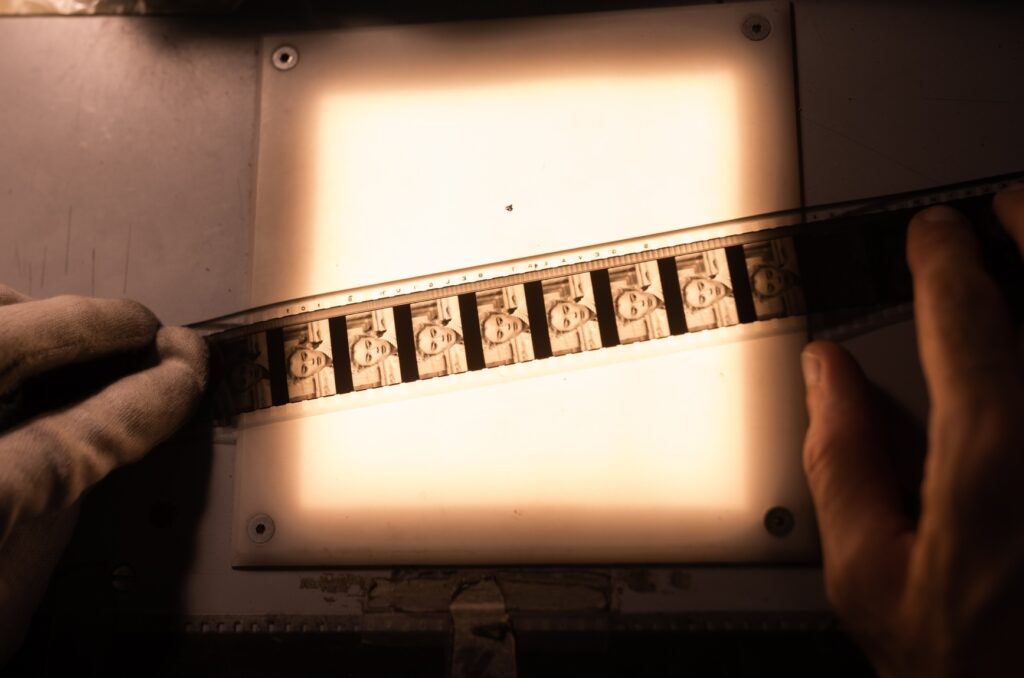
The restoration is based on the original camera negative of the Italian version, and the original camera negative of the Spanish version – both partly decomposed -, both held at the Fondazione Cineteca Italiana in Milan. The intertitles – missing in the negative – are reconstructed following the original list held at the Museo del Cinema di Torino.