[MOVIE]
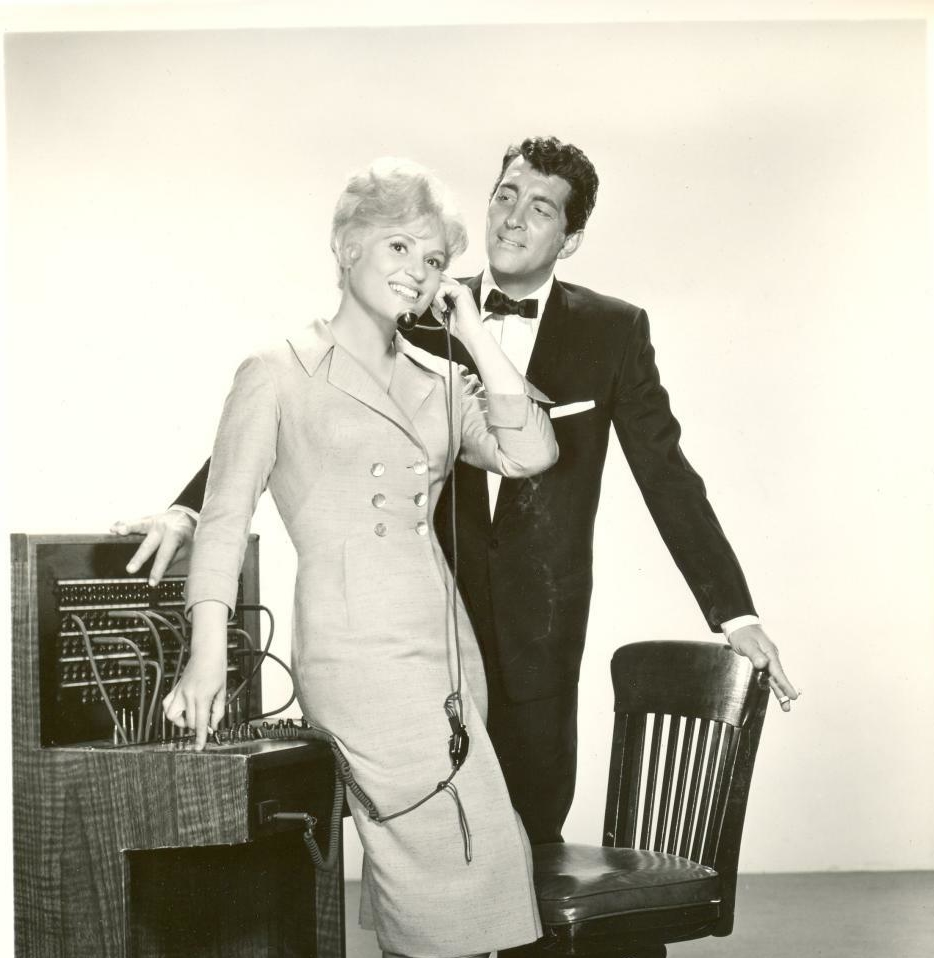
Bells Are Ringing was inspired by an ad in the NY telephone directory for a then-new concept, the telephone answering service. The writing team of Comden and Green fashioned the perfect vehicle to showcase the many talents of beloved comedienne Judy Holliday. Holliday is a delight as Ella Peterson, the warm and all-too-human “Susanswerphone” switchboard operator who gets involved in the lives of her clients. She’s a wiz at solving their problems – there are wonderful bits with a mumbling, beat Brando-esque actor, played by Frank Gorshin, and an aspiring songwriting dentist (Bernie West) straight from the pages of MAD Magazine – but romance eludes her. Every date is a disaster, until she meets the man of her dreams, Jeff Moss (Dean Martin), a smooth Broadway playwright with writer’s block. She turns Jeff’s life around, and her own, learning to be herself, and finding love at last. Holliday has a field day assuming various personas and accents, clowning, dancing, and singing. The happiness quotient is almost tangible as you watch her performance light up the screen. Like all great clowns, she also shows her vulnerable side, touching the heartstrings. The score by Jule Styne (composer of Gentlemen Prefer Blondes, Gypsy, and Funny Girl) features two immediate standards, the exuberant “Just in Time” – with a marvellous soft-shoe comic duet by Holliday and Martin, set in a Sutton Place park – and the wistful ballad “The Party’s Over”. Holliday’s final vaudeville showstopper, “I’m Goin’ Back (to where I belong, to the Bonjour Tristesse Brassiere Company…)” brings down the house. Sadly, it was Holliday’s last film; she died of leukaemia in 1965.
By this time Minnelli was an old hand with CinemaScope. There are the usual ploys of long sofas stretching across the screen, but in tune with Ella Peterson’s people skills he also fills the screen with characters, notably in the Times Square “hello” sequence and the name-dropping society party (whose lyrics are a rhyming census of the celebrities of the time, including MGM stars and members of the Freed Unit). It’s not all stage-bound, either. The actual glimpse of bustling Times Square at night, in colour, is tantalizing. When you leave the cinema, mull this question: When was the last time you said “hello” to the people around you? The 1950s were a different world. Catherine A. Surowiec